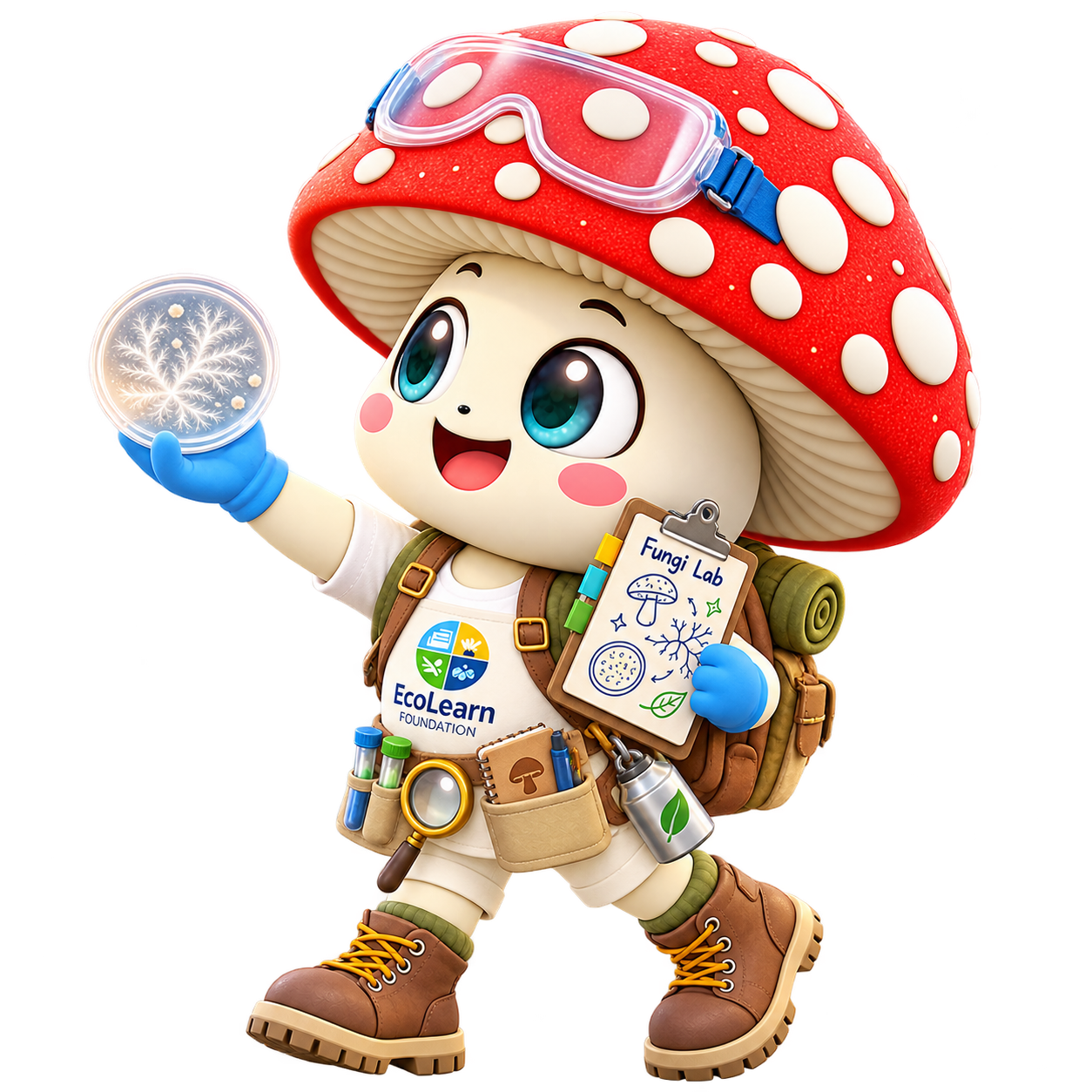
Sporey’s Fungi Lab
Welcome to Sporey’s favorite subject! This workshop explores the hidden world of fungi, mushrooms, and mycelium and the surprising ways they can be used for food, materials, decomposition, and environmental restoration.
Participants learn how mycelium—the thread-like underground network of a fungus—grows through organic material and helps break it down. We’ll explore how fungi can be cultivated for edible mushrooms, formed into mycelium-based bricks, panels, and packaging, and studied for their potential role in breaking down or capturing certain pollutants.
Depending on the activity, participants may inoculate growing material, examine mycelium development, handle finished mycelium products, or compare different fungal substrates. Sporey helps show that fungi are much more than mushrooms—they’re an important part of how ecosystems recycle, rebuild, and restore.
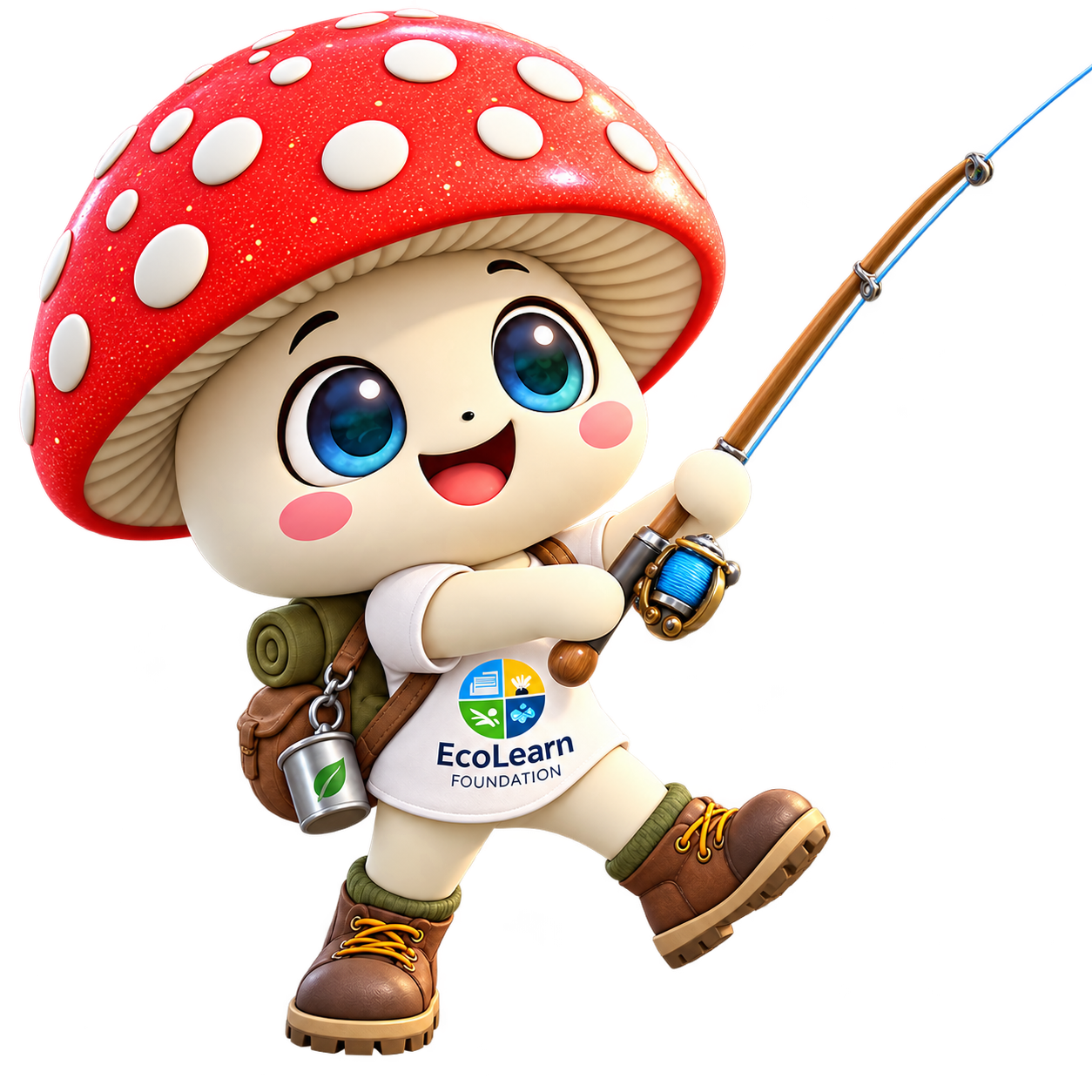
Fishing & Pond Ecology Workshop
This workshop begins with food and plant waste and explores how we can turn waste into a resource! Participants learn how suitable food scraps can feed Black Soldier Fly Larvae (BSFL), while plant-based scraps are processed through vermiculture (worms) to create nutrient-rich castings.
Next, we harvest BSFL and worms and head to the pond, where they can be used as fish feed and bait. While we’re there, participants test the pond water and learn how littoral shelves, aquatic plants, and Floating Treatment Wetlands (FTWs) help manage nutrients, improve water quality, and create healthier habitat for our fish.
After fishing, EcoLearn staff demonstrate proper fish-cleaning techniques. Fish scraps are collected and returned to the system as feed for the BSFL or processed through an appropriate composting system. The cleaned fish can be cooked on site or, for participating adults, packed on ice to take home in an insulated cooler made from mycelium—the underground network of a fungus!
It’s a complete hands-on lesson in food, waste, water, ecosystems, and circular sustainability—all connected in one workshop.
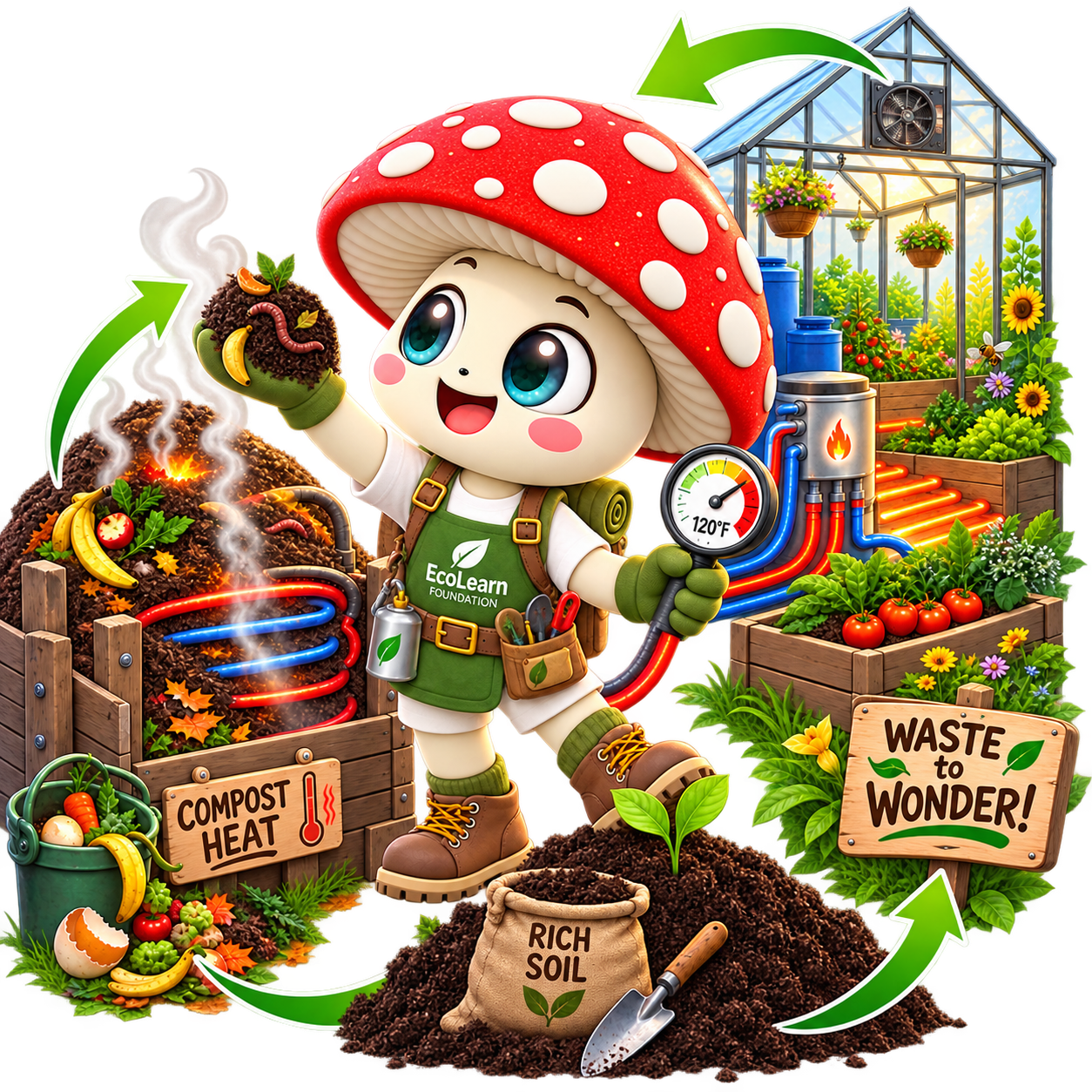
Waste to Wonder
What happens when yesterday’s waste becomes tomorrow’s resource? In this workshop, participants explore how food scraps, plant waste, and other organic materials can be transformed through composting and other natural processes instead of being thrown away.
We’ll get hands-on with EcoLearn’s composting systems and learn how decomposition creates nutrient-rich soil amendments while also producing heat. Participants will see how that heat can be captured and circulated through a greenhouse to help extend the growing season—turning a pile of organic waste into both fertility and renewable thermal energy.
This workshop connects waste reduction, soil health, food production, energy conservation, and circular design to show that in nature, very little is truly waste.
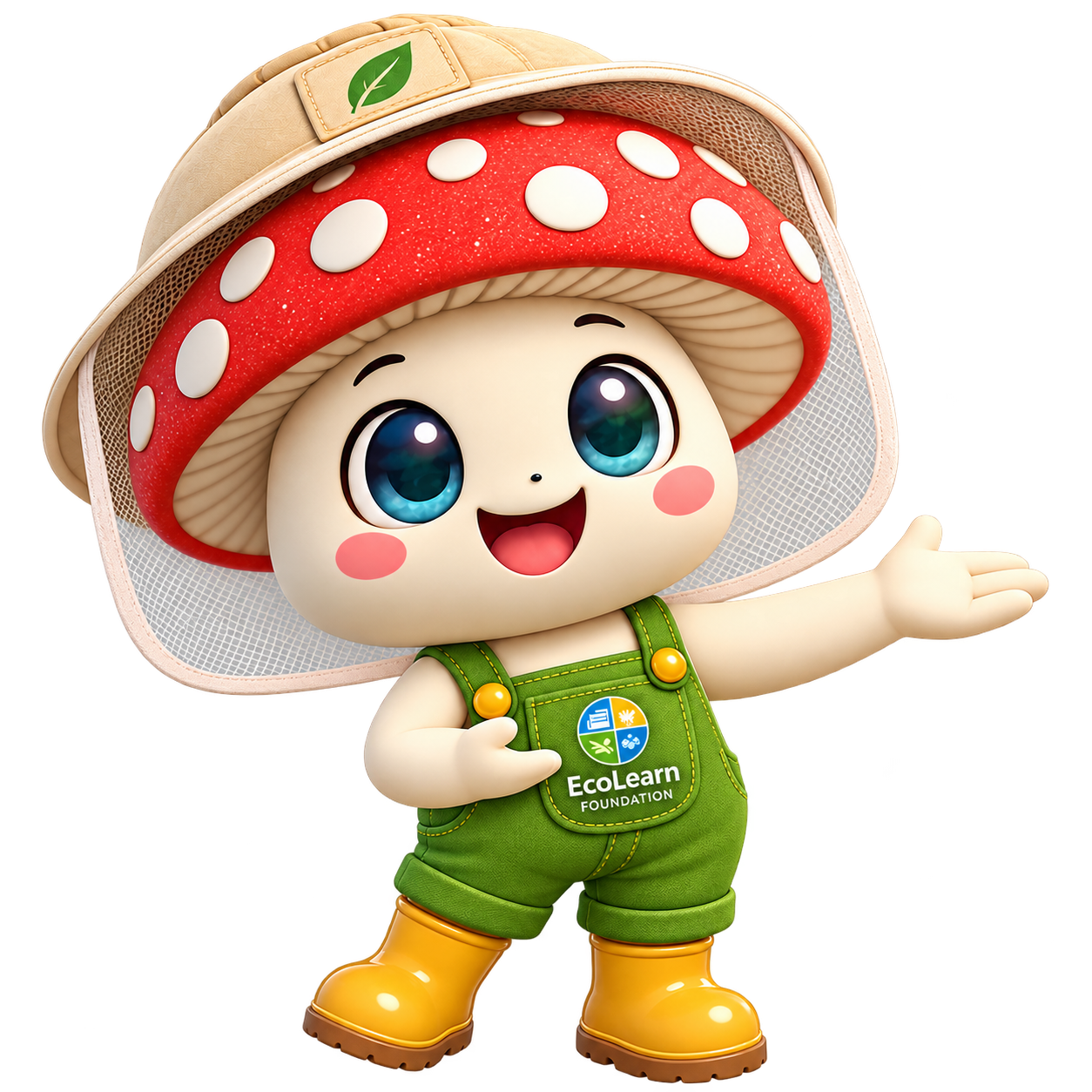
Grow, Pollinate & Harvest
This workshop follows the journey from seed to harvest and shows how healthy food systems depend on plants, soil, pollinators, and good growing practices working together. Participants get hands-on experience with greenhouse growing, microgreens, raised-bed gardening, and pollinator-friendly plants while learning how each system supports the next.
We’ll also explore the important role of bees and other pollinators, including how they help produce the fruits, vegetables, and seeds we depend on. Depending on the season, participants may plant seeds, harvest microgreens, work in the garden, observe pollinator activity, or learn directly from EcoLearn’s beekeeping program.
By the end of the workshop, participants will see how greenhouses, gardens, pollinators, and food production can all be connected into one resilient growing system.